Dispatch From Europe: Navigating Divergence and Uncertainty
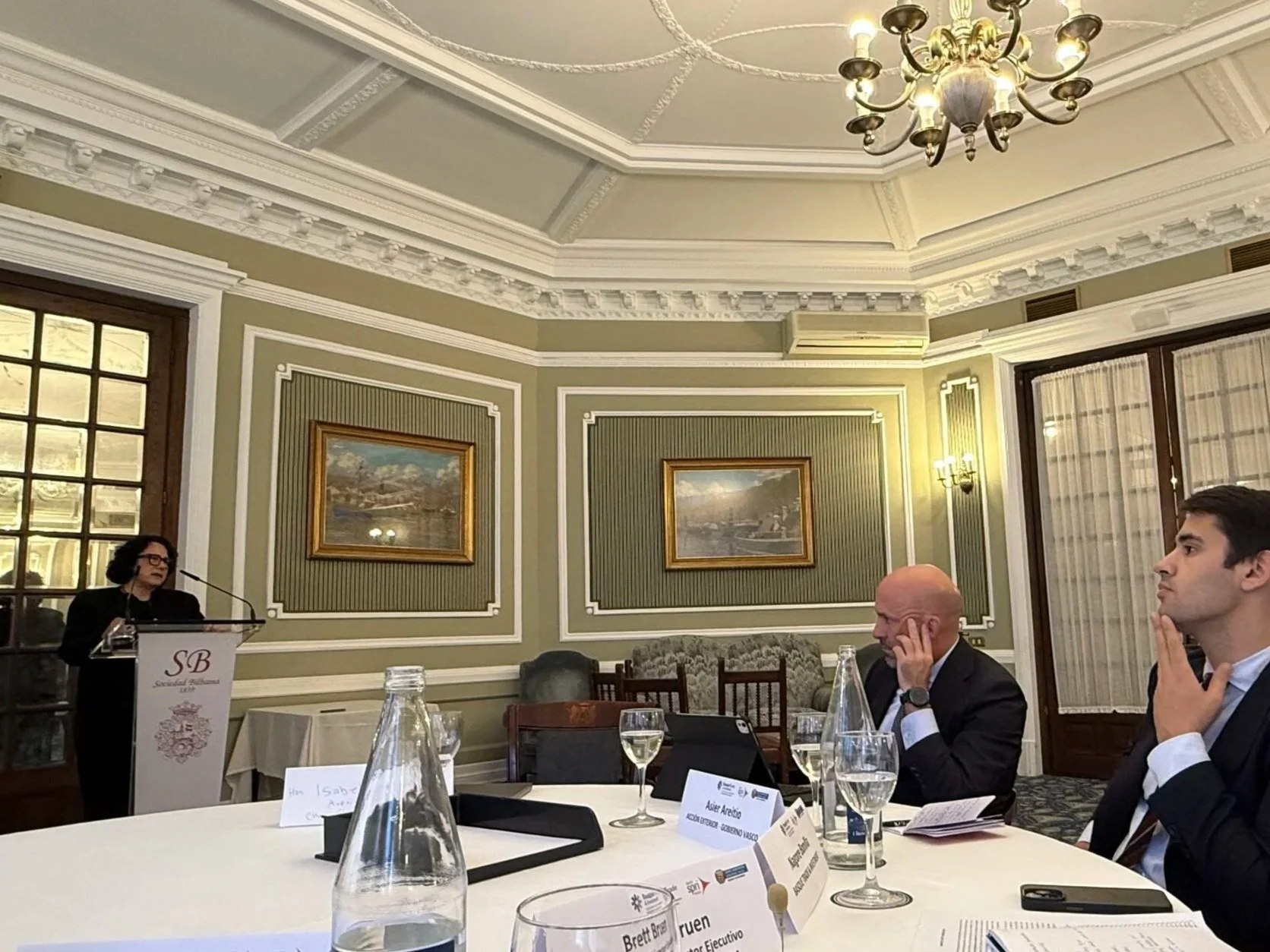
From Isabel Guzman, Chair, Global Risk Advisory Council
It was an intensive tour across Europe, during which I met with an influential mix of business executives, government officials, and journalists. We aimed to understand how European companies are managing today’s unprecedented challenges. It began in the Basque Country and wound through Madrid, and Brussels. My top takeaway was that the Atlantic has never felt wider when it comes to corporate reputation and values alignment.
From the boardrooms to the policy discussions we had, every conversation touched on the same unavoidable undercurrents—anxiety about an increasingly complex and challenging international reputational risks environment in an era of profound uncertainty and sharply divergent business realities between Europe and the United States. Executives are asking themselves, which values should we lead with? How do we navigate markets where political priorities don't just shift between administrations, but seemingly week to week?
What troubled European leaders most wasn't simply policy differences—it was the velocity and unpredictability of change. Meeting after meeting, from financial services to technology to multinational conglomerates, I heard frustration about extreme shifts in U.S. political priorities. Companies have always had to respond to changing political landscapes. But the current volatility creates tension that goes beyond normal market adaptation.
This divergence was particularly stark on issues like sustainability, amid heightened concerns as anti-climate sentiment gains ground at the U.S. federal level, even as California and other states chart their own course. Can you maintain climate commitments in Europe, while not running the risk of losing an American contract? How do you talk about both sides of this issue without offending one or the other.
Perhaps most concerning was the emerging transatlantic trust deficit. American brands operating in Europe are encountering new skepticism—not necessarily about their products or services, but about their association with broader American political and policy instability. European companies considering U.S. partnerships are proceeding cautiously, concerned about perception or, for example, how tariff policies might suddenly shift. The question, "Will American companies remain reliable partners?" would have been unthinkable a decade ago. Today, it's asked openly. And we're not just talking about partnering on U.S. soil. American brands entering foreign markets face profound mistrust in the marketplace.
I left asking myself, how much worse can it get? It’s an issue we need to track closely over the coming months. On both sides there is a need to seek out opportunities to reinforce common ground and restore trust. Unlike the trends of recent years, brands need to try as much as possible to insulate themselves from politics and even social issues. We need to accept there may be various versions of an overall story. Build up local amplifiers and validators, who can tell relevant regional or community stories, rather than global brand campaigns. Expand informational infrastructure, so when attention comes your way, there are materials ready to have a constructive conversation. Finally, start now to lay the groundwork of what comes next.